Friday, September 18, 2009

A Day in the Life of an Expat


Expat Mad Lib (remember those?) written by Traveler for Good from The Pursuit.
(Nouns, Verbs, and other word requests provided by me. Here's the result...)

 
Your alarm goes off! You fight and look out the window. Instead of seeing green grass and your neighbor walking his cow, you see raclette. What will the day bring?

You jump in the shower, remembering halfway through your shampoo that the 10C water only lasts for 5 minutes. On to breakfast. Your grab your favorite breakfast cereal of Schlect Wheat, grab an apple and drink some warm boxed espresso.

You leave the house and realize you didn’t get the memo. Everyone is wearing blue lederhosen and you are wearing pink. No time to change, you’ve already been down 13 flights of stairs and have walked to the cable car station.

You’re on your way to Zermatt in order to buy zwetschgen and to see the fog. You’re practicing in your head how the conversation will go in another language. “Gruezi, can you help me find the dictionary?” “Gibt es ein?”, and “that’s too schoen!”

It’s always hard to guess how others will respond. Will they take pity and speak to you in Swiss German? Will they pretend that they don’t understand? Will they teach you the right words?

It took you a while to explain what you were looking for at the shop in Zermatt, but you finally found it, successfully made your purchase without having to hand over the biggest Franc you had (which is what you do when you don’t understand numbers yet). A small victory, but a rainy victory nonetheless.

Now off to the fog. Your co-workers told you it was not to be chopped and they were right! It’s the biggest Alphorn in the whole country. School kids come on field trips and retired couples come to stroll along the pickup truck. They even sell cervalet! At Christmas time, you’ve been told, they even decorate the American Flag with purple lights.

On your way back to the cable car station, you pass a park where kids are playing Jass. You’ve never tried it and you’re really tempted to speak if you can play, because it will be a great milk for your friends back home.

As an expat, every day is a “Choose Your Own Adventure”…..do you stay and play or go back home to make Knoblibrot for dinner? It’s up to you!

For more from Traveler for Good, visit The Pursuit.

Thursday, September 17, 2009

12 Great Resources for Expats in CH


Ok, I admit it. I mainly went to the Expat Expo in Zurich because of the promise of freebies. After living in Switzerland for three years, I didn't so much need information as I needed confirmation that people still really do give things away for free.

Anyhow, I wasn't let down. The event was free. I got a free issue of Inside Switzerland magazine, a free issue of Swiss News, a copy of the International Herald Tribune, a cool reusable bag from Swiss Info, and a Jolly Rancher. One cherry jolly rancher may not seem significant, but if you had been craving this sour candy like I had for the last month, it would have been worth the trip alone (thanks to xpatxchange for that).

But I also got to do a few other things too. Like listen to people speak nothing but English. Like remember how fun eavesdropping can be. I also got to meet some of the folks at World Radio Switzerland, who I had talked to in recording studios but never in person. I tasted various kinds of cheddar cheese (talk about heaven). And get this, I also learned about some resources I didn't know about. Imagine that. So in a two post series for AffordableCallingCards.net, I'm going to share some great stuff about Switzerland (some that I knew about, some that I didn't) that I think you'll enjoy.

Print publications written for the English speaker by Swiss presses:

1. Swiss News is a great monthly magazine to read for, well, news. But it also covers politics, travel & culture, and has a great calendar of events.

2. Inside Switzerland is a quarterly magazine covering fashions and trends in Switzerland. It also has reviews of new products and places.

3. Hello Switzerland is free (what else is there to love) and all its content is written by its readers and editors as opposed to professional journalists although it does have a few reputable writers.

Web Resources

4. AngloInfo This site includes information for Zurich, Basel, Bern, Lucerne & Zug. It's got a list of businesses that serve the international community, a what's on guide, a cinema guide, classifieds and more.

5. Swiss Info A news and interactive multimedia website in nine languages, including English. For accurate news on Switzerland, this is one of my favorite sites. They also have a great blog called Write On. The discussions can get pretty heated here, so be sure to check out the comments.

6. Expat Marketplace A resource for buying, selling, and renting in Switzerland and beyond. Haven't tried it yet, but it looks promising.

For more, visit Part Two, which I'll post next week on ACC. Find out about an online magazine for international moms in Switzerland, an English bookstore and publisher in Basel (as well as a coupon code that will get you 10% off your online order), and when the next expo events are happening near you so you can get your share of what's free in Switzerland.

Tuesday, September 15, 2009

Weekend in Venice, Part 1

Guest Post by Tejal at wideeyedgypsy.

Venice unfolded in front of me like a beautifully illustrated fairy tale. The setting sun provided the perfect light as I struggled to cope with visual delight of sights all around me.


After a long train ride to Venice, my travel partner P and I had just enough time to deposit our bags at our hotel before rushing to take the water taxi to Lido, where one of the last screenings of the Venice Film Festival was taking place. By the time we got off the water taxi, we were seriously evaluating whether we should bother to spend a couple of hours watching a film at all, and instead head back to the main island – there seemed to be so much to see.


We had tickets however, so we rushed to the Biennale, where A Single Man, the debut film by designer Tom Ford, was being screened. I’ll hit the highlights – gay film, gorgeous men, great suits, beautiful photography, protagonist trying to kill himself, depressing and unsettling. Lead actor Colin Firth was announced best actor at the festival for this performance. (Refer to Shane Danielsen’s column for the professional review).

The overall movie-going experience was made even more enjoyable by the silent glares P gave me every time there was an on screen kiss or a gratuitous butt shot (this happened a lot). I never thought that I would actually be thankful that he was carrying his Blackberry and could therefore occupy himself with email.

Lido has a relaxed, chilled out vibe (somewhat like a Goa (India)). It was late after the movie, so we hoped we could find someplace open to eat (Geneva living has taken its toll). We hit jackpot however, as we discovered possibly the best pizza we’ve ever eaten. If you are in Venice, head to the S Lucia railway station. The area around the station is called Canareggio, (home to the Jewish ghetto). This is a great place to head to after a late night out (think streets of Bangkok at night). On Lista di Spagna, we found places that served sit-down dinners and snack bars that made fresh pizzas late in the night. We loved the one next to Gino’s, (you can’t miss it, it also has a shawarma spit and a gelateria). With two new gelato flavours to top up a midnight snack, we couldn’t wait for the next day to begin.

This is Part One of a three-part series. You can catch the parts two and the wrap-up on Tejal's blog wideeyedgypsy

Tejal is an aspiring writer and dreamer. The few hours she spends writing every day are an outlet for frustration and a source of joy.

Monday, September 14, 2009

Signs, Signs, Everywhere a Sign

Guest Post by Deb from the blog Peterthals in Zurich

When we first arrived, our new Swiss German world was quite intimidating. New language, new rules, and even new signs. The signage used around Switzerland cracks me up. There was a lot of time and energy put into each of these signs. Making sure each picture perfectly illustrates its meaning. However, I don't think they were expecting my "fresh off the boat" American interpretations.


This one is my favorite:

Rule 1: Do not generate a smoky cloud over the person in front of you.

Rule 2: Always have money. Nothing here is cheap.

Rule 3: Do not start a band on the tram.

Rule 4: Avoid sawing off the seat next to you.

Rule 5: Do not use razor-bottomed shoes to saw the seat in front of you, either.


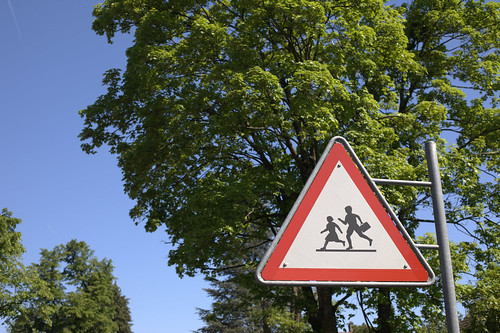
Caution: Children fleeing.


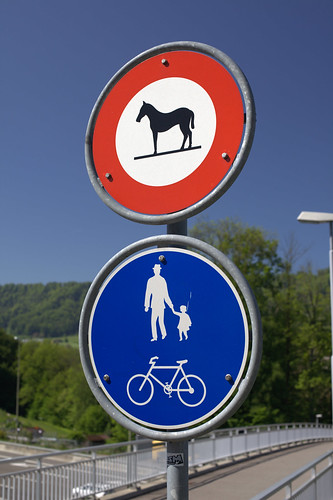
People and bikes may cross the bridge. No horses!


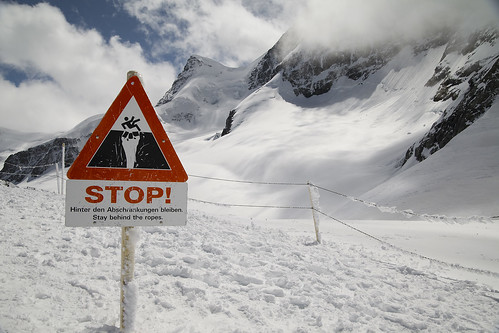
Beware: Hidden booby-trap ahead.


Dogs may not poop near Adliswil.

When all you have are pictures to go off of until you learn the language, my advice is to just be yourself. I think the Swiss expect us to make mistakes and look like silly Americans. It is just our nature. I wouldn't want to disappoint.

For more by Deb, visit Peterthals in Zurich.

Friday, September 11, 2009

8 Places to find English Books in Zurich, Part 2


Part Two of Eight Places to find English Books in Zurich is up over on affordablecallingcards.net. Check it out to learn about a few more places to buy and borrow those elusive English books in Zurich, including my favorite travel book shop. To read Part One, click here.

Photo by Brian Opyd.

Wednesday, September 09, 2009

Deutsch Lernen

Guest Post by Kathy from TwoFools in Zurich Blog


I love studying languages. Some people collect stamps, some build model trains. I study languages. I have even put this down as a hobby on my resume, in a joking, self-deprecating way. I studied Russian, French, Spanish, and Latin in (American) public schools. Slightly extending the gap year(s) before university meant starting over with Spanish and Russian.  In the past five years, I've started studying French again, took some Italian classes. And now German.

You might think, How wonderful to speak so many languages! I think so too and wish I did. I made it to a reasonable level of fluency only with Russian (what with that being the language of my field of study in grad school I pretty much had to).

And now German. Here I am in the Alemannic world with my love of language study, lots of free time and a desperate need to communicate outside of my cozy little anglophone world. I am in charge of household stuff, and that means using German with movers, repairmen, shopkeepers, dry cleaners, receptionists, Kreis officials, and so on. But more than this, here is my chance to really, finally become fluent in another language. I am feeling very motivated.

Ready, set, go. A few weeks after arriving I started intensive classes at a nearby school (starts with L, ends with I). At first I was a little dismayed. This was clearly the instructor's day job, a little too beneath him to be troubled to learn to be a teacher. Or perhaps he just lacked the gift.  No matter, he was just filling in for the regular instructor. Also, the core group of students was a particularly congenial and motivated group of English speakers.

The regular instructor was amazing. He was able to seamlessly introduce the new vocabulary into whatever topic he was covering so that our listening comprehension really grew along with the necessary but tedious effort of memorizing new words. He was great at grammar explanation, relentless in making the students speak in class. So what if the school kept dumping additional students with varying levels of ability into the class, sometimes exceeding the maximum number of students specified in their promotional literature. So what if the the construction site outside made it a little hard to hear with the window open. The teacher was gifted and the core group motivated. I learned a lot in those first two months, and really felt I was on that first upward curve of a learning peak.

Language learning is not a straight-line process, even if classes are. There are peaks and valleys and plateaus. Being on the rising curve of a peak is one of the most exciting and rewarding parts of language learning. Suddenly  you're reading an article in the paper. Without realizing it, you've gotten into  conversation and you understand what the other person is saying. Wow. And there is always another peak ahead. That makes it a little easier to take the plateaus and valleys.

I'm in a valley now. Here's what happened. I had to go back home for a month for a family medical emergency. (I should say here that I am very grateful that I was able to do this and am happy to report all is well at home now.) I came back to the same class but was hopelessly behind. After a few days I asked to be moved to another class that had just started an earlier the chapter.

Like the first temporary instructor and one other substitute teacher we'd had for my first class, this instructor was just useless at grammar explanation and not at all in charge of the class. In her defense, the students were quite a lot to handle. A princeling from some small oil-producing kingdom, a sulky Columbian Lolita, a high-energy Brazilian woman who enjoyed taunting the princeling into rages, two Turks mostly in their own world. They were all young, loud, and entitled. They also all shared an amazingly poor grasp of the vocabulary and grammar, making it almost impossible to get any benefit from the class. I got out.

A month (mostly) of travel and now home in Zürich a month, I have already forgotten some vocabulary and barely made a start on moving ahead on grammar on my own. Unlike some others, I lack the iron self-discipline it takes to study language on my own, at least not in the beginning stages. I need the structure of a class to keep me going.

I already knew this about myself of course.  We factored the cost of classes into the "What will it take to move to Switzerland?" planning. (My husband gets some free classes and some others reimbursed through his job. Lucky sod.)

So now the search for a new school starts again. Rather than just picking a place a random, which I did last time, I'm trying to be little smarter this time. There are a lot of language schools in Zürich, ranging from the Kantonal school to Migros Klubschule to dozens of pricier choices. (I found a pretty useful list here.) The competition hasn't really done much to ensure quality and it varies pretty widely. Apparently, schools here stay in the black by paying low wages to teachers and by continually slotting new students into open classes. (Schools in my home town don't do this, but they're going broke now.)

My new search rules.
  • Know what you want in a school and try to find one that fits your criteria. Small classes? Professional teachers? Close to your house? Cost?

  • Ask for advice and opinions about quality of schools. One school has been pretty frequently criticized by friends and in online forums, so I'm passing on that one.

  • A school should offer you the opportunity to at least sit in on a couple of classes at no charge before registering.

  • Make sure you understand the fees and refunds offered in case of cancellation (yours and the school's) and closures. My previous school canceled a class for a week because "too few students" were able to attend. They didn't offer a refund and only offered make up classes when pressed for this. They also didn't offer refunds or make up classes for holiday closures.

  • If the school has promised a benefit it doesn't deliver, complain to the Chef (director). My previous school offered excursions as an included benefit, but these somehow never happened.

  • To get a sense of what's out there in terms of quality, I checked out English Forum threads on language schools. Next I started eliminating schools that are too far away (that ruled out two lower priced options: Migros and EB Zürich). I also called and did a phone screening at a few places. I got a pretty negative vibe off of Alemania and a good one from Bellingua.

    Bellingua offers a 2-week, money-back trial period and promises lots of other good stuff. I'm going Monday for my assessment test and to get started on my free trial. I'm pretty excited about it.

    So excited in fact that I've pulled out all my study aids. Study aids are essential part of a language-study hobby, of course, ensuring that the maximum dollars are spent to ensure the osmotic language learning process is fully engaged. I have grammar books, text books, self-teaching books and CDs, dictionaries, vocabulary builders, and on and on.

    But my favorite study aid is actually free (if you don't count the cost of the phone). It's an iPhone/Blackberry app called gFlash. Instead of making all those flashcards, hundreds of them, just create spreadsheets in Google docs and then upload them to the app on your phone. Bingo, presto. The sheets are formatted into flash cards. You also get nifty quizzes that help motivate you to get through yet another vocab list.

    That's the thing, of course. In the end, you have to commit lots of words to memory and learn the grammar. You have to listen and speak and read. The classes and study aids are really just a good way to trick yourself into doing this hard work.  Never surrender, never give up.

    To read more from Kathy, visit her Blog, TwoFools in Zurich.

    Monday, September 07, 2009

    One Big Yodel. Now with Yodeling.

    It's about time that One Big Yodel really yodeled. And since I was trained as a singer (maybe you'll hear the opera overtones but I did my best to keep them minimal!) before I became a writer, I figure it is high time to combine the two. So instead of just writing about expat life today, here's a little blogging Karaoke. The words to the song are below in case you'd like to sing along. Maybe you'll recognize the melody. It's from The King and I.


    Hello, Young Expats


    When I think of expat life
    I think about a time
    When I ate a lot of cheese
    And I drank a lot of wine

    And the constant fog cloud
    Was always overhead
    And the bells clanged loud
    While I laid in bed.

    There are new expats now
    Living in Switzerland
    Looking hard for cheddar cheese

    But I know that they’ll find it pre-packed at the Migros.
    Thanks to expat bloggers who tell all. Like you. And me.

    Hello, young expats, whoever you are
    I hope your trash fines are few.
    Tie your paper in bundles with string.
    I’ve lived in Switzerland like you.

    Be brave young expats and barge in the “line”
    Be brave and ruthless and rude.
    Fight to the front with Swiss attitude.
    I’ve lived in Switzerland like you.

    I know how it feels to be fast on your wheels
    And to bike up the Alps easily.
    But as you ascend and turn round the bend
    You are passed by a retiree.

    Don’t cry, young expats, whatever you do.
    Don’t cry because you seem slow.

    All of my memories are happy tonight.
    I passed a Swiss on a hike.
    I passed a Swiss on a hike, truth be told,
    I passed a Swiss 5-year-old!

    If you have a request for a song topic, please let me know and I'll do my best to create it on a future karaoke blog. If you're having trouble listening, let me know.

    Thursday, September 03, 2009

    8 Places to find English Books in Zurich


    It allures you with its title. It makes you pick it up to admire it. As you hold it in your hands, you feel a slight rush like you can’t believe your luck.

    It’s the English-titled book.

    But then you open it. And all your hopes are dashed when you see the German text. Time and time again you fall for this.

    It seems like a cruel joke to title something in English when it is in German. Granted, many of these books were originally written in English but this is no excuse for getting the hopes of a book-thirsty English-speaking expat soaring. Unfortunately, in Switzerland, you literally can’t judge a book by its cover. Because you’ll only end up disappointed.

    That's where this post comes in. Written on behalf of AffordableCallingCards.net, this is a two-part series on where to borrow and buy English books in Zurich. Real English books.

    1. Orell Füssli. Bahnhofstrasse 70, 8001 Zurich. The largest selection of English books I have found in Zurich. Three tempting floors selling everything from fiction to travel to DVDs at not so tempting prices. (A paperback for CHF 30?) Oh yeah, despite being blissfully surrounded by stories you can understand, you check the price and realize you haven't really escaped Switzerland after all. But be sure to check their website from time to time for author appearances. I saw David Sedaris do a reading last year and it was wonderful.

    2. Zuercher Brockenhaus Neugasse 11, 8031 Zurich. Decent selection of second-hand books on the second floor. Paperbacks are usually CHF 3 and hardcovers CHF 8. It can be hit or miss, but there's fun to be had in the hunt.

    3. The American Women's Club of Zurich library. Schoentalstrasse 8, 8004 Zurich. Members can use this 5,000 book library for free, but non-members can use the library for a yearly fee of CHF 75 (that's like three paperbacks at Orell Fuessli...). The club also organizes book sales from time to time. Check their online calendar for more information. There's a sale coming up on the 17th.

    4. bookdepository.co.uk The best part about this website is it offers free shipping anywhere in the world. The prices are competitive with amazon, but the free shipping (no matter the size of your order) usually makes the prices cheaper if you're ordering small quantities.

    Stay tuned next week for Part Two on where to find English books in Zurich. And please leave a tip if I haven't covered a great place you know of, or can comment on other parts of Switzerland or know of other great websites. Thanks in advance and happy reading!

    Wednesday, September 02, 2009

    Looking for a few Guest Bloggers

    Because I can only type with my left hand at the moment (more on that another time...), I'd like to take the opportunity to do something I've been meaning to do for awhile: invite a few good bloggers to write a guest post for One Big Yodel. If you're interested, please leave a comment or send me an email with your topic and we'll go from there. If you leave a comment, make sure I have your contact details in some way. Looking forward to hearing your stories and helping to promote your blogs and your writing!

    Monday, August 31, 2009

    You Never Know What You'll See Inside a Swiss Castle


    The Castle in Oberhofen, on Lake Thun, has everything from Louis XVI style garden rooms to Turkish smoking rooms, pictured above. It features a hodgepodge of designs, making it a museum of style, rather than a display of true castle authenticity. If you want to see a castle just like the royals left it, you'll have to head to Canton Aargau to the castle in Wildegg.

    But either way, I still recommend Castle Oberhofen. It's two boat stops from Thun, or if you prefer to hike, about a two-hour hike away along the lake, passing through vineyards and forests (and up and down a few hills, as my legs are reminding me today). Just follow the yellow hiking signs to Oberhofen. And then relax and take the boat back.

    Friday, August 28, 2009

    8 Ways to Save Money in Switzerland, Part 2


    Thanks to all who left comments about How to Save Money in Switzerland. Click here for Part Two. Read about my favorite flea markets and second-hand stores as well as the way Migros takes their budget brand just a little too far.

    Wednesday, August 26, 2009

    25 kilometers? A Swiss 4-year-old could do it!


    On Sunday, my Facebook status said, "Biked 25 k". One of my friends in the U.S. commented, "wow, what are you training for?"

    The answer? Nothing. A 25-50k bike ride is just what thousands of normal Swiss citizens (and even some Swiss dogs) do almost every summer weekend thanks to a program called Slow Up. And they don't just ride on any road--they ride along sparkling blue lakes, through the Alps, and sometimes through multiple countries (there's a Liechtenstein/Switzerland ride every May). Plus, during the ride you get free (yes, I said FREE) apple juice, cheese (wouldn't be Switzerland without it), and granola bars. And participation is free. You won't get any more fun for free in this country.

    Despite the fact that Switzerland has about 20 gazillion biking, in-line skating, and hiking trails, they want more. And so almost every Sunday during the summer, the Swiss authorities close off 25-50k of roads from 10 a.m. until 5 p.m. and this makes just about everyone happy--with the exception of drivers, that is.

    It's amazing to see the level of fitness a normal Swiss citizen has. Biking and in-line skating in last Sunday's Slow Up were people everywhere from 4 years old to 80. A 25k bike/roller blade outing is nothing for most Swiss, evidenced by people doing it pushing/pulling everything from wheelchairs to baby carriages, to dogs in baby carriages. It is quite amazing.

    I highly recommend joining one of these events in you're living in or visiting Switzerland. Bikes are available to rent at each event if you don't have one or don't want to bring yours on the train (each Slow Up is coordinated with Swiss public transportation). But don't forget to buy a ticket for your bike if you take it on the train. Bikes don't ride free and the conductor will check.

    Next Sunday's Slow Up is along the Bodensee (Lake Constance). Check it out here.

    Monday, August 24, 2009

    That Foreign Feeling


    There's no doubt about it. Sometimes you just want to feel special. As an English-speaking expat in Switzerland, there are times when you don't feel very unique since every Swiss person you meet seems to speak English and also couldn't care less that you're from the U.S., the UK, or South Africa--big deal, they say, they've been there five times.

    I almost gave up on feeling exotic in Switzerland, until one day, I met a couple of Swiss guys that had never talked to an American before. In my Swiss News column this month, you can read all about that elusive foreign feeling that I finally achieved three years after arriving in Switzerland. But I have to say, the wait was worth it.

    Thursday, August 20, 2009

    Eight Ways to Save Money in Switzerland


    Welcome to Switzerland. Land of the most expensive Big Mac in the world. Land where a plate of Chinese food costs the equivalent of $25 (Come on, Chinese food?). Land where two rib eye steaks will set you back $35 at the meat store. Whew. It’s enough to make any former tightwad like me reconsider her Swiss residency. So how has a former American cheapskate survived living in der Schweiz for three years? Read on, my fellow money-savers, read on. Below is part one of a two-part series.

    1. Grocery Shop after 5 p.m.
    For those of you who work, shopping after 5 p.m. is probably the only option you have, but it’s a smart one. Many stores will add 25-50% discounts to perishable items towards closing time. At the grocery store inside the Coop City in Baden, for example, the clerks go around with their 50% stickers beginning at 5 p.m.--and yours truly is stalking them. This is how I’ve managed to buy 750 g of beef for CHF 3,75, two chicken breasts for CHF 3, and a 1.5 Liter of Fanta for CHF .90. (Yes, even soda is perishable in Switzerland).

    2. Buy big items during the traditional sale months
    January and July. That’s when I do most of my clothes and home accessory shopping in Switzerland. For example, my husband and I waited to buy some pillows for our outdoor furniture until July and were rewarded with a price of CHF 5 per pillow (originally CHF 40). So we bought seven pillows at Manor for less than the price one. To quote a Guinness ad, “Good things come to those who wait.” And if you hurry, there are still some sales out there left over from July as I write this.

    3. Book hotels in Switzerland last-minute using rooms.ch
    Planning an overnight trip in Switzerland? Chances are you don’t want to go if the weather’s bad anyhow. I spent a rainy weekend in Locarno a few months back and I wouldn’t have gone except I had booked a hotel and they wouldn’t let me cancel without penalty. So why not wait until last-minute and book your hotel on the Swiss Budget Hotel website, where last minute rooms around the country go for CHF 99 for two people.

    4. Border Shop
    If you live near a border town, shop there. I’ve written about the benefits of shopping in Germany before and I still go every month or two to stock up on things that are ridiculously priced in Switzerland like tortilla chips. At the Famila in Waldshut, Germany, not only are their Poco Loco tortilla chips tastier than anything I’ve found in Switzerland, but they also cost the equivalent of CHF 3 for a 450-gram bag. A 450-gram bag. Unheard of in Switzerland. And Moevenpick ice cream? We all know that costs at least CHF 10 in Switzerland, but in Germany, the same thing costs the equivalent of CHF 3,50.

    Anyhow, I hope these tips will get you started on saving in Switzerland. If you have any tips to add, please leave a comment. Would love to know how to save even more money in this crazy country. Stay tuned next week for Part Two where we'll discuss budget store brands, discount stores (are they really cheaper?) and more.

    Wednesday, August 19, 2009

    Making Friends in Switzerland


    It's hard to make friends with the locals. But you are not alone--the Swiss themselves find it hard to make friends with other Swiss. One Swiss friend of mine told me that during his first week of work at a new company this summer, not one person asked him if he would like to go to lunch. Wow. And my friend is an outgoing, friendly guy. So if you're an expat wondering what you're doing wrong, don't feel bad. To make friends in Switzerland, you need time.

    After all, I am now great friends with my Swiss neighbor. But even she didn't tell me her first name for over an entire year. Instead I continued to call her Frau V, even while I ate raclette in her apartment.

    One of my good German friends has also made many efforts to make Swiss friends--and with little success. So you should also know that it's not just the language barrier that's the problem. Many Swiss are content to have three or four good friends and that's it. They don't feel a need to have more and often aren't interested in finding new acquaintances. Of course, there are exceptions to this and I've been fortunate to find a few.

    Anyhow, the strange Swiss Friend Phenomenon all makes it very hard for expats, especially those interested in making friends outside of international clubs. I've been here over three years and I can count on one hand the number of Swiss friends that I have. Luckily, when you do make a Swiss friend, they are some of the most loyal friends that you can find. So it's worth the wait. But as most expats living in Switzerland can tell you, the wait isn't easy.

    How about you? What are your experiences making friends in Switzerland?

    Monday, August 17, 2009

    Is Canton Aargau cool after all?


    Many people in Switzerland make fun of Canton Aargau. Admit it, maybe you're guilty too. Apparently Aargau has a reputation for being old-fashioned, white-sock wearing, and dreadfully boring. “Why are you living in Canton Aagrau?” former colleagues in Zurich used to sneer, wrinkling their noses.

    To be fair, if I had known about the whole stigma attached to living west of sophisticated Canton Zurich, maybe I wouldn’t have given good old Aargau a chance either. But the thing is, Canton Aargau has castles. I should know. I live right below the one in Baden. And when it’s lit up at night, it tends to make even my snobby Zuricher friends admit that maybe, just maybe, at least one town in the state of Aargau is worthy of an apology.

    Zurichers don’t want to admit it, but back in the day, they used to come to Canton Aargau, to my little town of Baden to party. Baden was where the party was. Because Baden was a Catholic town, Zurichers would come to escape their wholesome Protestantness and party in Baden’s spas where they sang, danced, and drank all night long.

    Today, castles are to Aargau what Armani suit-wearing lawyers are to Zurich. They’re everywhere. And let’s be honest. Which would you rather have a lot of?

    Anyhow, in Aargau there’s Wildegg Castle, Lenzburg Castle, Hallwyl Castle, Aarburg Castle (pictured above), and many more. I highly recommend them all. I just visited the Aarburg Castle yesterday and while I gazed up at it with my feet in the green Aare River, I thought, you know what, Canton Aargau deserves better. After all, it's where I call home.

    Thursday, August 13, 2009

    How to Find (and Lose) a Job in Switzerland


    I came to Switzerland as a trailing spouse who never planned on becoming a Hausfrau. I found a job in Zurich. I lost a job in Zurich (thanks, economy!). But that's where you benefit. Because I have become a Switzerland job searching (and losing) expert. I've written about finding a job in Switzerland. I've written about losing a job in Switzerland. I've even talked about it on the radio. Here, I've rounded up all my knowledge in hopes that it might help you:

    FINDING A JOB:

    How to Find a Job in Switzerland
    Here you'll find 10 online resources for finding a job in Switzerland. Included are sites especially for those in finance, communications, academia, as well as general job searching sites.

    Trailing Spouse Advice on Finding a Job in Switzerland
    How I found my Swiss job and tips for finding yours. Hint: start looking before you move.

    How to Land an International Assignment
    You're Young. You're starting your career. You want to move abroad. What to do first.

    LOSING A JOB:

    Laid off in Switzerland? What to do First.
    Five things you should do first upon getting laid off from a Swiss company.

    A Three Month Sentence
    An essay about getting laid off, Swiss style.

    The Living Layoff
    A Four-Part Radio Series about what happens when you get laid off but still have to keep going to work.
    (email me if you'd like the audio files, blogger makes them difficult to post)

    Wednesday, August 12, 2009

    Who Has the Most Expensive Big Mac in the World?

    The Big Mac Index is a way to analyze currencies and show how expensive countries are by comparing the price of a Big Mac worldwide. The 2009 index shows Switzerland with the highest priced Big Mac in the world. The price of a Swiss Big Mac is 58% higher than the cost of a Big Mac in the U.S. But thanks to this ad campaign, at least now we know why.


    McDonald's in Switzerland only uses Swiss beef.

    Monday, August 10, 2009

    Why I Spoke Bad German for 3.5 Hours

    Yesterday I spoke non-stop German for the longest time in my life. Three and a half hours. It was bad.

    I heard myself using the wrong forms of the verb "to have", starting a past-tense sentence with "ich habe" only to realize the verb at the end required an "ich bin" (but by then it was too late to go back and start over), and also partaking in my very favorite habit of leaving off the verb entirely since having to place it at the end of a sentence after words like "because" makes me forget I even need to use a verb in the first place.

    Throughout my butcherings of the German language, my German friend spoke to me like I hadn't just said things like "My husband, her have today lunch with girlfriend". Instead, she kept the conversation going, translating my bad German to good.

    I don't know how she did it.

    But then again, what's a few wrong verbs combined with a hundred misplaced articles when you've perfected more important words like "Super" and "Genau"? Communication always comes down to filling in the blanks anyway. So while I imagined what my friend was saying, she imagined what I was trying to say. It was really a win-win.

    That is why I was able to speak bad German for 3.5 hours. Because I finally found someone patient enough to listen for more than two minutes before switching to English. And for that, all I can say is a grateful danke vielmal. Maybe I'll actually get better someday. Because I think all that's between me speaking bad German and me speaking good German is that one person who will actually listen.

    Thursday, August 06, 2009

    Laid off in Switzerland? What to do first.


    If you’re reading this and have been recently laid off, don’t worry, you’re not alone. According to recent statistics, unemployment is the highest it has been in Switzerland since the 1990s. And due to a lag behind other economies, Switzerland’s job market isn’t forecast to improve until December 2010.

    If you’re a foreigner in Switzerland, chances are you’re going to be let go first. From my experience, the RAV in my town is filled with people speaking High German and bad German, two give-aways that most of us newly unemployed are not Swiss.

    Most contracts in Switzerland require employers to give their employees three-months notice upon terminating their employment. This sounds nice, but emotionally, it can be hard to keep working for a company after they’ve let you go—especially if you’re an American like me who isn’t used to the concept (to help you through the pain, read about how I survived my notice period or email me for audio files to a 4-part series I wrote and performed for World Radio Switzerland on being laid off, Swiss Style—yes, my first job after being laid off was to write about the experience).

    Anyhow, here are the first five things you should do upon being laid off in Switzerland:

    1. Take your official “laid off letter” to your local city hall. They will give you a piece of paper (stamped of course, the Swiss love stamps) that proves you are laid off. (Don’t ask me why the original letter isn’t proof).

    2. Start looking for employment. If you can’t prove that you’ve been looking for work during your notice period then you can lose some of your unemployment benefits. (Note: to be eligible for benefits, typically you must have lived and worked in Switzerland for a certain amount of time…at least a year and possibly two. I don’t want to give specifics here for the chances of being wrong since all of these numbers depend on situations and permits). FYI, your current employer is legally required to give you time off for interviews and job hunting.

    3. Get a Zeugnis (a reference letter) from your employer. They may let you write it yourself, and if so, learn the “code” words (i.e. use as many adjectives in a row as possible until it sounds utterly ridiculous and then you’ve probably got it right) so you can make sure you sound as great as possible (at least in Swiss terms—I would never show this letter to an American employer—it sounds way too over the top to be real…hmm but then again that sounds like most of Swiss life).

    4. Register at your local RAV. You must do this before the first day of
    official unemployment. Brace yourself for huge piles of paperwork in a language other than your own. At my RAV, no one speaks English, so maybe you’ll be more fortunate. You must bring the paperwork talked about in #1 as well as your CV, Diplomas, ATM card, Zeugnis, and Permit.

    5. Register at the ALK (the RAV will give you these forms after you do point #4).

    Pray that unlike me, you fill out all the million forms correctly and actually start getting unemployment checks for your efforts. But if you don’t, look on the bright side, your vocabulary will really improve fast.

    Good luck. If you have questions, comments, or something you’d like to know more about on the topic of unemployment in Switzerland leave them below and I’ll do my best to answer or create new posts based on them.

    Stay tuned for Part 2 next week, How to Find a Job in Switzerland.

    Wednesday, August 05, 2009

    Outdoors in Switzerland: Slideshow


    Pictured Above: a trail over the town of Ennetbürgen

    There's no doubt about it--Switzerland is best enjoyed outdoors. Thousands of hiking trails, hundreds of vineyard strolls, and tens of lake boats await. Unfortunately, some places in Switzerland, like Zurich, get more rain than London, but when the weather cooperates, there's no more beautiful place on earth.

    If you need proof or just need help deciding where in Switzerland to go on a beautiful day like today, have a look at my slideshow: Outdoors in Switzerland. It was published yesterday on National Geographic's glimpse.org.

    Monday, August 03, 2009

    Construction Country


    I have come to the conclusion that Switzerland is the loudest country I have ever lived in. At this very moment, my roof is being drilled. Whether or not it's actually my roof is not the point, the point is, it sounds like my roof is being drilled and that is not a very pleasant thing to listen to. This drilling started last week, and according to a letter I can sort of read, it appears as though the drilling will keep going until the end of the month.

    Of course, they couldn't coordinate the drilling project with the restoration of the clock tower, which just concluded last week after 18 months. Just as I was cheering the fact that this obnoxious project was finally over, I get a letter informing me of another.

    Now I don't know, maybe I just had bad luck in choosing an apartment. Because besides being surrounded by non-stop construction projects, I'm surrounded by all night festivals like Carnival and Badenfahrt which force me either to flee the country or feel jet lagged for days.

    But the fact is, it seems no matter where you go in Switzerland you see one of two things: a crane or a hole in the ground. And both come with curious Swiss people reading detailed construction project signs as though they were the Magna Carta.

    Part of the noise problem stems from the fact that the Swiss have so much money they don't have anything better to do with it than renovate and rebuild things that don't need either renovating or rebuilding. The road in front of my apartment has been dug up and repaved so many times I've lost count. And last year, they replaced all the windows on our building except mine and my neighbor's, so clearly, they were just bored because our windows are just fine as they are.

    With the recession hitting Switzerland, you'd think the construction would come to a halt or at least a low roar. But alas, as I sit here listening to yet another day of pounding, all I can think is, please Switzerland, it's time to scale back and cut costs. Or at the very least, spare your residents a free set of earplugs.

    Thursday, July 30, 2009

    Blogging For Business (and Pleasure)


    Many expats I know have blogs. Most start out as journals to connect with people back home. But some, like Toma Haines' blog, The Antiques Diva, inspire full-blown businesses. (Haines' tour business, inspired from her blog, now gives up to 48 antique shopping tours a year in various locals like Paris, Amsterdam, and Berlin.)

    Then there are expat blogs like Swisstory that make money through different kinds of advertising like the Amazon affiliate program.

    As one gets established in the blogging world, working as a professional blogger is also a possibility. For example, Jul of This Non-American Life, has blogged for several b5media sites and yours truly has blogged for swissinfo.org, glimpse.org, and affordablecallingcards.net.

    To find out more about how some expats are turning their joy of blogging into a (small) business, read my article, Blogging for Business (and Pleasure), in this month's Swiss News.

    Wednesday, July 29, 2009

    What the Swiss Laugh At

    Is it me, or does it sometimes seem like the Swiss have no sense of humor? I've had a number of experiences that have just left me confused:

    1. Once, when ordering tickets at the SBB ticket window, the agent asked me if I had a student ID card so I could get the student discount. I laughed, thanking him for the compliment, but telling him I wasn't a student. Instead of joking back, he got all serious on me, "Oh I'm sorry, ma'am," he said without a smile.

    2. Sarcasm. The Swiss just don't get it. Unfortunately, as a copywriter, my preferred headlines were always sarcastic, but my Swiss boss would just stare at them and scratch his head while a South African guy I worked with would laugh and laugh.

    There are many other experiences, but the point is, the Swiss do have a sense of humor, and we foreigners just don't see it. Because what do the Swiss laugh at? Us.

    According to the Witzerland exhibit at the Landesmuseum, the Swiss laugh mainly at foreigners.


    If you don't believe me, here are some examples:

    Making Fun of the Russians:


    Making Fun of the Polish:


    Making fun of dark-skinned foreigners:


    To see these "jokes" and more, the Witzerland exhibit at the Landesmuseum in Zurich goes until September 13th. But it's probably only worth spending the CHF 10 if you can read a bit of German. The exhibits aren't translated so you can either read them or you can't. But either way, you might end up confused anyway, like I was by this:


    This one, however, made perfect sense, especially if you consider how fast change comes to Switzerland:

    Monday, July 27, 2009

    The Bürgenstock Felsenweg Hike. So easy, you could do it in flip flops!


    To justify buying expensive Salomon hiking boots this weekend, I had to go on a hike. So I read Lonely Planet's Walking in Switzerland book in order to find a hike rated "easy".

    No, I'm not a wimp. Only an experienced judge of my ability as it relates to the author's. Based on my last experience with this book, I wasn't going to choose anything rated even "easy-medium". Because the 5 Lakes Hike, rated "easy-medium" by the book, turned out to be so challenging, that I almost didn't make it back to the cable car before it closed at 5.30 p.m.

    Now I consider myself in good shape. I jog. I bike. I hike. I climb 500 stairs just to get to the path of one of my favorite jogging paths above Wettington. But all of this doesn't matter; every time I go to the Alps, they kick my butt.

    This time was no exception. I chose the Bürgenstock Felsenweg hike, which is an "easy" and scenic hike along the side of a ridge overlooking Lake Lucerne. The first 30 minutes of the hike was easy and flat. But then my husband and I of course had to take a detour to ride the overpriced but facinating Hammetschwand-Lift (a crazy elevator that literally takes you 160 m further up the side of the mountain).
    This lift cost 500 million Francs to build in 1905 and only the Swiss would spend that much for the novelty of proving they could do it.

    But I digress. Since my husband and I paid a grand total of CHF 18 to ride for two minutes in this Swiss mountain elevator, we decided to hike down to Ennetbürgen from there instead of riding the elevator back down again. Either way, we'd end up in the same place--the Ennetbürgen Post bus stop.

    This part of the hike was not easy. The terrain was steep. We walked through mud, wooded paths with lots of rocks and roots, and through steep grassy mountain fields that only resembled a path because of the red and white painted hiking sign and the narrow line of trampled grass. But once again, I was shown up by the Swiss, who found the hike so "easy" that they were doing it wearing flip flops, leather dress shoes, and ballet flats.

    I almost felt foolish for wearing my new fancy hiking boots until I finally saw someone else wearing a similar pair. About to point her out to my husband, I looked up and realized this women must have been at least 80 years old. But still. It felt good to see I wasn't the only one who felt the trail warranted something other than what I would wear to the office.

    Thursday, July 23, 2009

    The Top 8 Undiscovered Swiss Towns


    To help you avoid the getting caught on hundreds of other vacationers’ souvenir snapshots this summer, here are eight undiscovered Swiss towns (brought to you in a two-part series, click here for Part 2), that all offer something unique—from a spa with the most mineral-rich water in Switzerland to three grand Roman castles you can call your own.

    Baden

    Baden means, “to bathe”, and this medieval spa town boasts the most mineral-rich water in Switzerland. Complete with bubbling lounge chairs and rows of jets carefully measured for a complete massage, the Baden spa is also lit by candlelight on weekend nights in the winters. So let the rest of the tourists flock to Vals for their wellness escapes. Baden, (the choice of Goethe and Nietzsche) is where exapts (and travelers) looking to avoid the crowds relax today.

    Gandria (pictured above)

    Palm and olive trees frame this colorful cliff-clinging town on Lake Lugano. Narrow lanes, locals that greet you with “Buon giorno,” and restaurants that cook with the locally produced olive oil, make Gandria an atmospheric boat trip from Lugano —especially if you plan on stocking up on handmade ceramics. But for those that depart without heavy bags, a well marked, (but not too well-traveled) olive tree trail winds back along the lake.

    Neuchatel

    Mix fine wines, watches, and yellow limestone buildings, and you’ve got the recipe for a town Dumas described as being carved out of butter. Only 12 miles from France, Switzerland’s French-speaking university town comes complete with a Gothic cathedral and a 15th century castle. Walk along the lake, admire the fountains in the old town, or take a hike through the vineyards—anything to work up an excuse to eat at a brasserie.

    Seengen

    Find the middle of nowhere and make it the center of the universe. That’s pretty much how it feels standing in front of the Hallwyl Castle in Seengen. Complete with a moat and a grassy courtyard, the castle also holds performances of operas and plays. From the castle, it’s only a 15-minute walk to Lake Hallwil, where the day can be completed via a boat ride, a swim, or a stroll past the many vineyards.

    Stay tuned next week for Part 2. But in the meantime, what do you think? What are the best undiscovered Swiss spots you’ve found?

    Wednesday, July 22, 2009

    Won't You Be My Neighbor (And Tell Me Your First Name?!)


    Even though we share a wall, it took me over a year to learn my Swiss neighbor's first name, not to mention get to know her. But the struggle was worth it. Three years later, we're great friends. We go flower picking together. We complain about noise together. We even drink together (like we're going to do tonight). But in Switzerland, making friends is a long process. Maybe some of you have stories about making Swiss friends. If so, I'd love to hear them.

    Anyhow, I wanted to share my story about making friends in Switzerland, "A Raging Party Turned by 73-year-old Neighbor Into My Friend" . It's up on glimpse.org and is the featured story.

    (photo above by Brian Opyd)

    Monday, July 20, 2009

    When and Where to see the Lavender in Provence


    The lavender in Provence is something that you shouldn't miss if you're living in Europe.

    It's not just the sight of endless waves of purple, but also the sound of thousands of bees. And the smell of the perfume that only thousands of lavender plants can fill the air with.

    I've gotten a lot of questions recently on when and where to see the lavender in Provence.

    Here's a short run down:

    When: The lavender blooms in Provence from the end of June until about mid-August when they celebrate with harvest festivals.

    Where: The two main lavender areas I recommend are around Sault and the plain of Valensole. I highly recommend staying in a Gite (a family-owned, restored country manor house) to round out your French experience. The owners may not speak English, but all of the ones I have met are still able to communicate with you.

    If you're looking for a place to stay right in the middle of the lavender, I highly recommend La Bastide des Bourguets (The photo above was taken from their property). It's a beautifully restored country manor house. It has spotless huge rooms and bathrooms and a fantastic owner who doesn't speak English, but will make sure you understand her anyway. Open your window from one of her rooms, and you'll see and smell the lavender since it's right outside your door. She also rents out little free-standing houses by the week.

    Friday, July 17, 2009

    The Russians are Coming!


    The other night, my doorbell rang.

    This kind of event used to freak me out because I figured it was either my neighbor complaining about the way I was doing my laundry or an unknown person that I definitely wouldn't understand.

    It took three years, but now I'm to the point where I don't mind opening my door and seeing who's there because I can finally talk and understand German. Over the last few weeks, I've had some interesting people knocking:

    -Two women from Jehovah's Witness that wanted to give me a German Bible
    -A guy from the local TV station that wanted to film an event in Baden from my balcony (but offered no money)

    But perhaps this week's topped them all:

    -A guy from Russia wearing a gigantic fanny pack that was filled with wooden Russian nesting dolls that he wanted to sell me.

    I can't wait to see who next week will bring...

    And how about you? What surprise visitors have you had at your door lately?

    Wednesday, July 15, 2009

    Tuesday, July 14, 2009

    The Cost of Driving in France

    Anyone doing a road trip in Europe knows that gas prices are sky-high. For the equivalent of a gallon of gas, one will pay between $6.40 and $7.92 this summer in France. To fill up our little Ford Focus cost an average of 80 EUR ($115) for an entire tank of gas. Can you imagine the outrage if Americans had to pay this much to drive in the U.S.? (And as a side note, this is the one area where Switzerland actually looks cheap. Gas in Switzerland is about $5.88 a gallon. What a deal!)

    The other thing the French get you on are the toll roads. To drive from Geneva, Switzerland to Marseille, France on the highway for example, will cost you about 50 EUR ($70) in tolls. I have to hand it to the French though. They're really putting your toll money to work. The one accident we saw only cost us two minutes of time and the French had vans complete with flashing accident signs and also an official "accident woman" waving a red flag in front of the flashing vans in case all of those florescent lights weren't enough.

    So you won't waste time due to accidents on French toll roads, but you will waste time at toll booths, spending 20 minutes in line for the honor of paying your 20 Euros for an hour of driving time. These booths are terribly slow, like most things French, and don't always function correctly. One booth we sat in line for rejected all coins put in it, and this caused much strife among the French, some of who were driving horizontally across the highway "parking lot" to find a better functioning booth. It was a mess.

    The third way driving is costly in France is because of crazy ratings that make certain little cities (Gordes, Fontaine-de-Vaucluse, Roussillon) believe they are worthy of a big parking charge. The French like to rate their cities with nicknames like "One of the most beautiful" or with flowers instead of stars. A French city with a 4-flower rating will definitely charge you at least 4 EUR for the pleasure of parking on the far end of it.

    A French man we met at a B&B in Sault was really upset about all of these parking charges and they are kind of ridiculous. It's this crazy French attitude that "We're beautiful and you will pay." So after paying parking fee after parking fee, my husband and I decided to visit the cities NOT rated as the most beautiful and we were rewarded for our efforts with free parking and fewer tourists. I highly recommend places like Sault, Simiane la Rotonde, and Aurel where beauty and FREE parking abound. That, in my book, is a five-star place to explore.

    (It must not be "one of the most beautiful cities" because it has free parking...this is pretty Simiane la Rotonde, a bit off the tourist route and thank goodness.)

    Thursday, July 09, 2009

    Germany: Easy to Love


    A friend of mine recently had his first experience driving on Germany's Autobahn. He loved making his American-made rental car race the BMWs but it just made me wonder, why do people in Germany drive so fast?

    Then I went to a Galeria Kaufhof and it all became clear. The Germans can't help it--not only do they have no speed limits but they're also high on sugar.

    Between the availability of Cherry Coke and the Jelly Belly bars at the Galeria Kaufhof in Munich, where I can pick out all the cotton candy, popcorn, and coconut flavored jelly beans without having to deal with mint, I have to say, the availability of products at the top of the food pyramid in Germany is quite astounding. As an American who used to survive on junk food before she moved to Switzerland and was forced to buy fresh, I can't help but thank Germany for encouraging me to enjoy a sugar high on every visit over the border.

    Tuesday, July 07, 2009

    Driving in Colmar

    When driving near Colmar, France, you'll come across many interesting things:


    -A roadside Buffalo Grill complete with a Native American as a mascot.


    -Endless "toutes directions" signs, encouraging you that no matter what, you can't be going the wrong way.


    -Lady Liberty*, greeting you in the middle of a roundabout. If you can't get enough of the novelty, no problem, just keep circling.

    *The Lady Liberty creator, Frédéric Auguste Bartholdi, was born in Colmar, thus the reason for the hulking highway statue.

    Friday, July 03, 2009

    All The Pretty Little Swiss Boys


    I don't know about you, but I find Swiss pageants some of the most entertaining things on Swiss TV (Swiss dating shows are right up there too). Because of my strange infatuation with the Mister Switzerland pageant, I couldn't help but write a whole essay about it (let's be honest, any show where the audience brings genuine cowbells to cheer on their male beauty king of choice has to be good). Anyhow, I'm sorry to report that my favored candidate, the lad from Aargau, didn't even make the top 8. But despite it all, I was still inspired to write the essay, "Showtime in Switzerland", which you can read online or in July's issue of Swiss News.

    Wednesday, July 01, 2009

    Another Reason I Love France

    For any of you that grew up with a name that was a little less than popular in your home country, maybe you'll understand another reason why I love France:


    LinkWithin

    Blog Widget by LinkWithin